Kwa Mansah v. Amba kitse land in Saltpond
Transcription
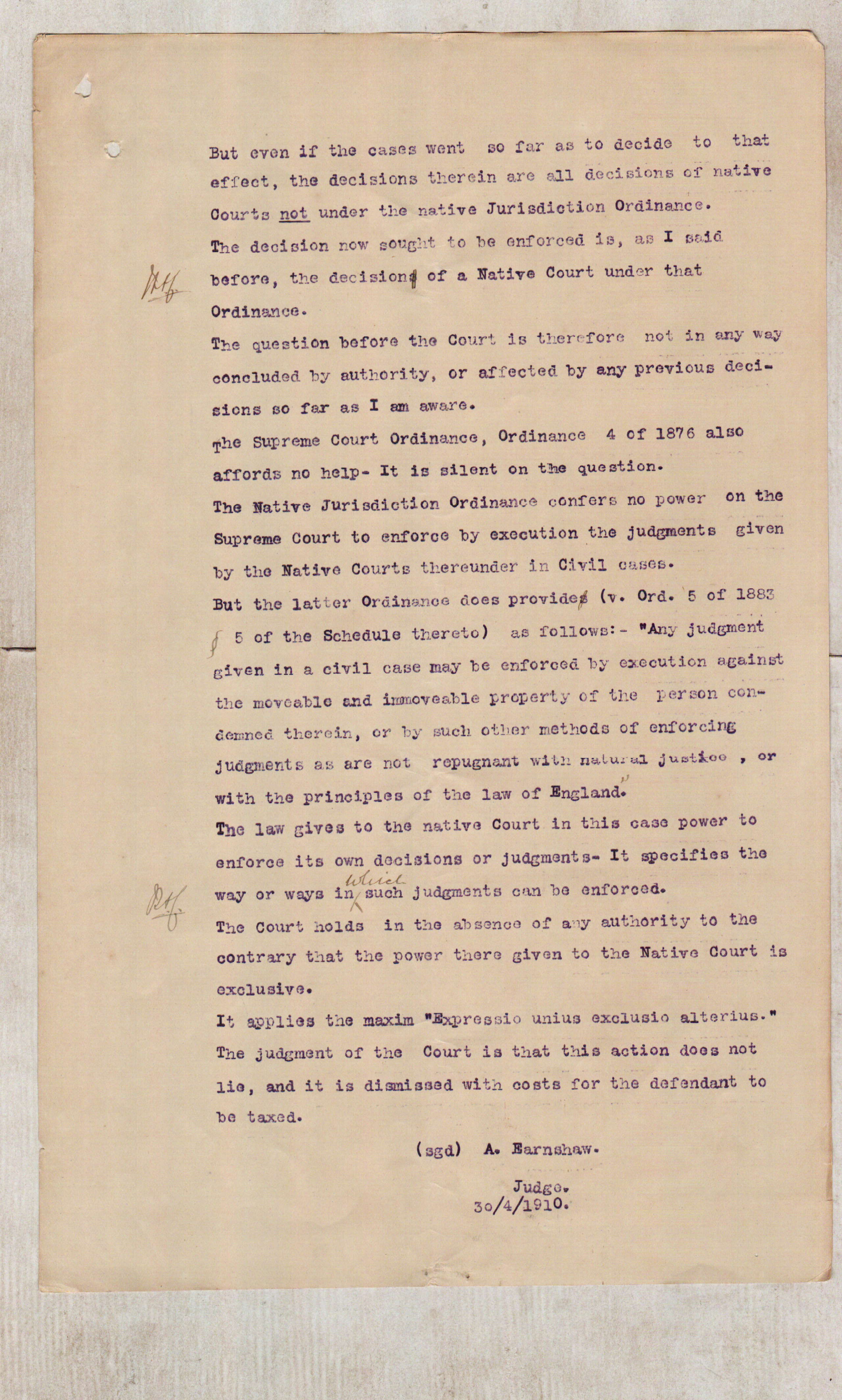
But even if the cases went so far as to decide to that effect, the decisions therein are all decision of native Courts not under the native Juridiction Ordinance. The decision now sought to be enforced is, as I said before, the decision of a Native Court under that Ordinance.
The question before the Court is therifore not in any way concluded by authority, or affected by an previous decision so far as as I am aware.
The Supreme Court Ordinance, Ordinance 4 of 1876 also affords no help- It is silent on the question.
The Native Jurisdiction Ordinance confers no power on the Supreme Court to enforce by execution the judgments given by the Native Courts thereunder in Civil cases. But the latter Ordinance does provide (v. Ord. 5 of l883 of 5 of the Schedule thereto) as follows:- "Any judgment given in a civil case may be enforced by execution against the moveable and immveable property of the person condemned therein, or by such other methods of enforcing judgments as are not repugnant with natural justice, or with the principles of the law of England".
The law gives to the native Court in this case power to enforce its own decision or judgments— It specifies the way or ways in which such judgments can be enforced.
The Court holds in the absence of any authority to the
contrary that the power there given to the Native Court is exclusive.
It applies the maxim "Expressio unius exclusio alterios ." The judgment of the Court is that this action does not
lie, and it is dismissed with costs for the defendant to be taxed.
(sgd) A. Earnhaw.
Judge.
30/4/1910
Typed from the scan. Spellings follow the original and may contain mistakes.